We have all been there. You sit your child down for the “internet talk,” armed with a list of logical reasons why they should never click on pop-ups or share their passwords. You speak, they nod, and five minutes later, they are back on their device, having already forgotten the third bullet point on your list.
In 2026, the digital landscape is too fast and too complex for memorized rules to be our primary line of defense. Rules go in one ear and out the other because they lack context, they feel like chores, and they don’t engage a child’s imagination. Stories, on the other hand, stick. When a child learns cyber safety through a story-based book, they aren’t just memorizing a list, they are building an internal compass that guides them when you aren’t in the room.
Why Lectures and Rule Lists Don’t Work for Kids
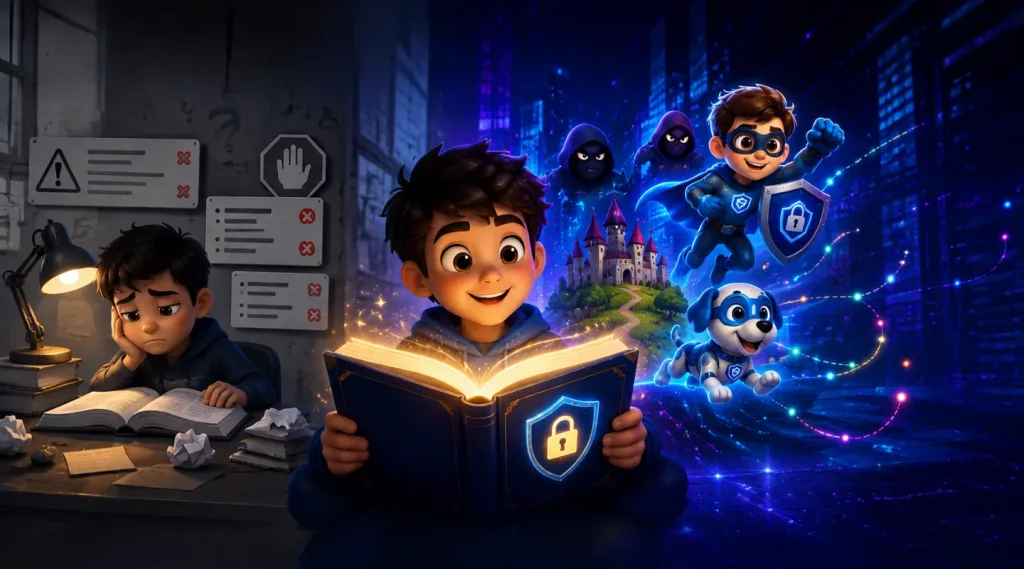
The primary reason traditional lectures fail is that they are abstract. To a ten-year-old, “identity theft” or “phishing” are distant concepts that happen to other people in movies. When we give children a list of rules, we are asking them to apply adult logic to a digital world designed to exploit their impulsivity. Their attention spans are naturally shorter, and their brains are still developing the executive function required to weigh long-term consequences against the short-term excitement of a “free” game skin or a new friend request.
Furthermore, rules often feel restrictive. Children are naturally curious explorers, and a list of “don’ts” can inadvertently make the prohibited behavior feel like a challenge to be conquered. When safety is presented as a set of boundaries enforced by an authority figure, the goal for the child becomes avoiding the parent’s detection rather than avoiding the digital danger itself.
The Science Behind Story-Based Learning
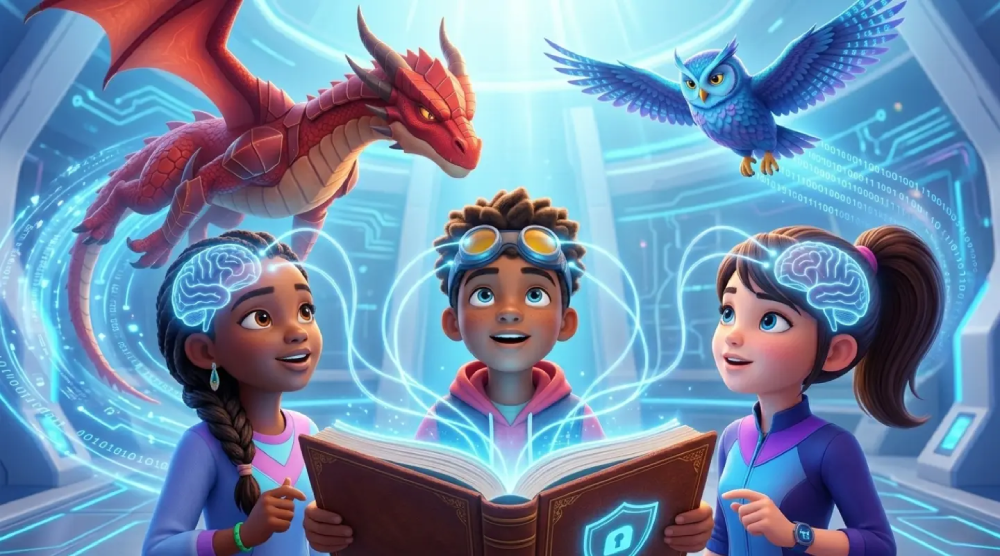
There is a profound neurological reason why stories are more effective than statistics. When we listen to a well-told story, our brains undergo a phenomenon known as neural coupling. Essentially, the listener’s brain activity begins to mirror that of the storyteller. If a character in a book feels tension while navigating a dark digital alley, the child reading that book experiences a similar neurological response.
This is facilitated by mirror neurons, specialized brain cells that fire both when we perform an action and when we observe someone else doing it. For a child, reading about a character’s digital mistake allows their brain to “practice” the situation without the real-world harm. They feel the character’s regret, they experience the character’s resolution, and they internalize the lesson as if it were their own lived experience. This “implicit training” is far more durable than any lecture because it is encoded in the brain’s emotional and sensory centers, not just its logical ones.
How Stories Make Online Risks Feel Real and Relatable
Abstract threats become tangible when they have a face and a name. A “phishing scam” is a vocabulary word, but a “glitched upload” that threatens to reveal a secret is a crisis a child can understand. Stories allow children to recognize the emotional “red flags” of digital danger before they encounter them in real life. They learn what it feels like to be pressured by a stranger or manipulated by a troll through the safety of a protagonist’s journey.
Empathy is the most powerful firewall we can build. When a child roots for a character, they care about that character’s safety. As they follow a hero through a digital mystery, they aren’t just spectators, they are partners in the decision-making process. They learn to ask the same questions the character asks: Is this person who they say they are? Why does this link look different? Should I tell an adult about this?
What Makes a Good Cyber Safety Story?
Not all story-based books are created equal. To truly teach kids cyber safety, a narrative needs four key elements:
- Relatable Characters: Kids need to see themselves in the protagonists. The characters should have flaws, make mistakes, and navigate the same apps and social pressures that real children face.
- Realistic Online Risks: The “monsters” in the story should be grounded in reality. Phishing, viral rumors, and privacy leaks are far more frightening and useful to learn about than exaggerated, unrealistic villains.
- Safe Resolution: The story must show that mistakes can be fixed by talking to trusted adults. The goal is to build confidence, not just fear.
- Discussion Prompts: The best books act as a bridge, providing parents and educators with a natural way to start conversations after the chapter ends.
How The Cyber Squad Chronicles Gets It Right
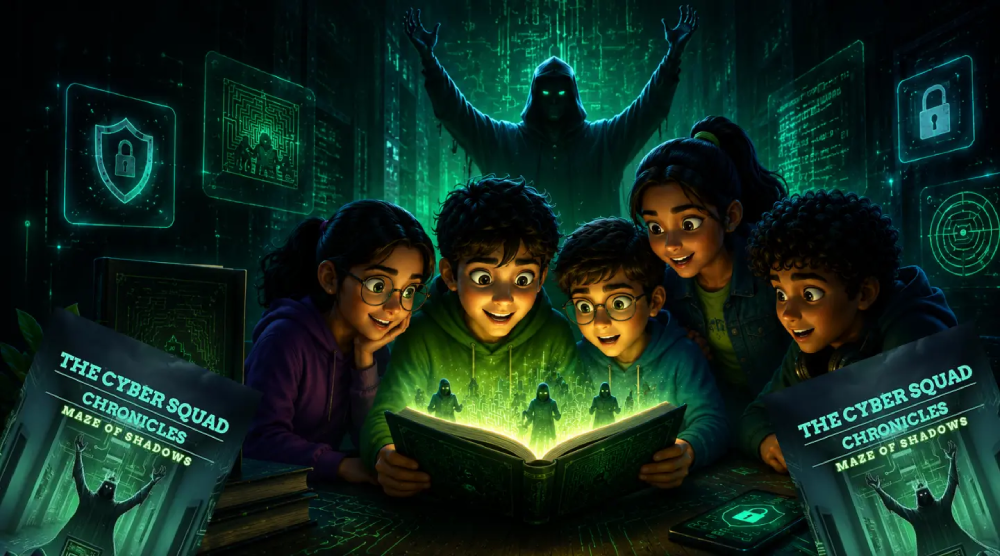
As a cybersecurity professional, I designed The Cyber Squad Chronicles to be the antithesis of a dry safety manual. The series follows Isha and her tech-savvy team at Orion Academy, a setting that feels immediately familiar to middle-grade readers. By turning digital safety into a high-stakes adventure, we ensure that the lessons are caught, not just taught.
The series is anchored by three unforgettable mentor figures who help translate complex security concepts into memorable metaphors. Pixel the Owl represents digital wisdom, teaching the squad to pause and think before they click. Blaze the Firewall Dragon embodies protection and resilience, showing that being safe online requires a strong defense. Quackers 2.0 provides the humor and heart that keeps children engaged even when the topics become serious.
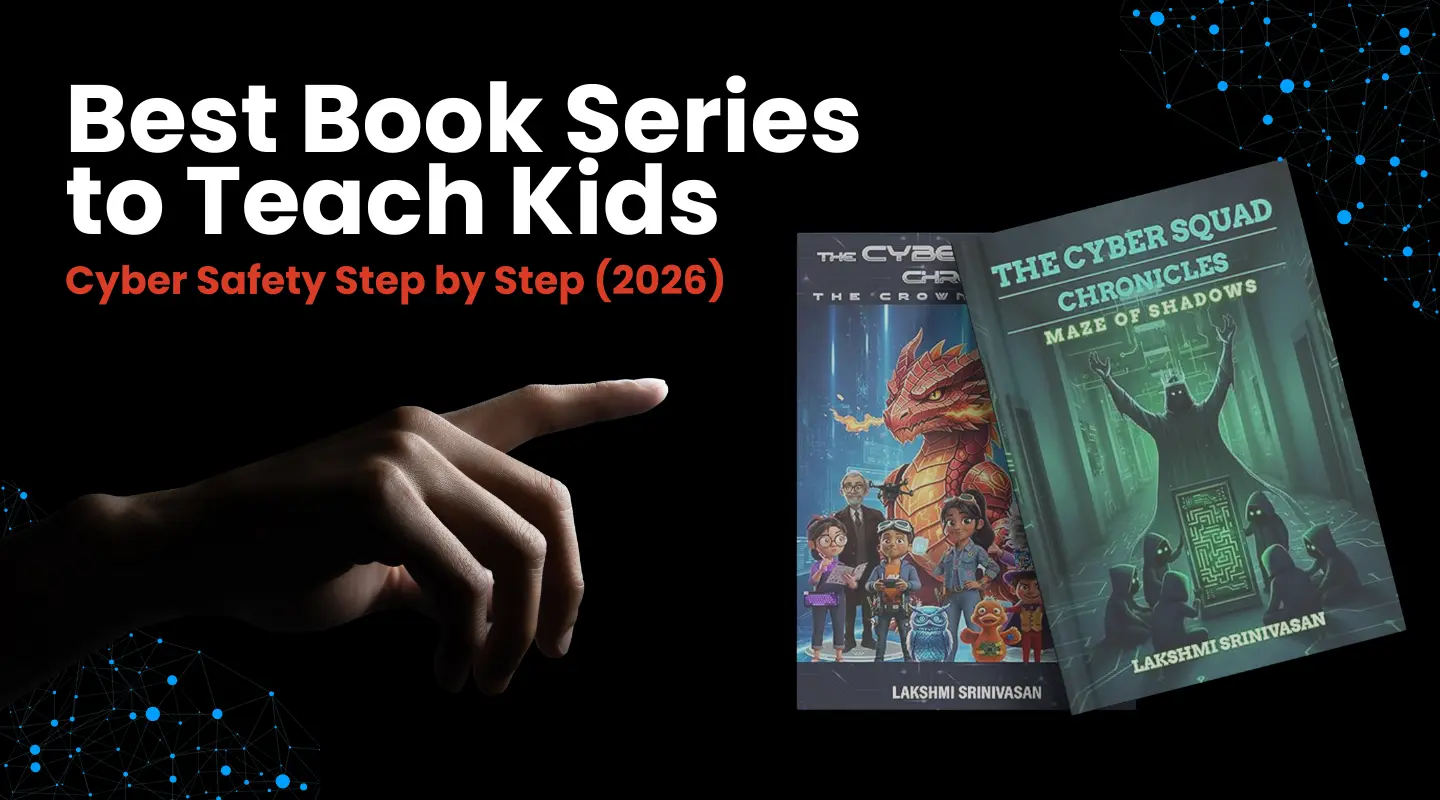
In Book 1, The Crowned Glitch, the squad faces phishing traps disguised as school messages and the subtle grooming of fake friend requests. As each chapter unfolds, the Cyber Squad transforms these challenges into lessons on digital footprints and identity protection. In Book 2, Maze of Shadows, the focus shifts to the social-emotional side of the web, dealing with viral rumors, the pressure of online reputation, and the vital need for digital balance.
By the time a child finishes these books, they haven’t just read a story, they have completed a comprehensive training course in digital citizenship without ever realizing they were “learning.”
Explore the Series on Amazon — Individual Books $6.99 | Bundle $13.98
Tips for Parents: Reading and Discussing Together
The most effective way to use story-based books is to make them a shared experience. Instead of handing the book over and walking away, try these strategies:
- Read One Chapter at a Time: Pause at the end of each mission. This prevents “information overload” and allows the specific lesson of that chapter to sink in.
- Ask “What Would You Do?”: Before the character makes a choice, ask your child what they would do in that situation. This forces them to engage their own “internal firewall.”
- Connect to Their World: If a character is dealing with a viral rumor, ask if they have seen similar things happen in the games or apps they use.
- Use the Characters as Shortcuts: Later, if you see your child about to click a suspicious link, you don’t have to lecture. You can simply ask, “What would Pixel the Owl say about that?”
Related Reading
- 10 Important Internet Safety Rules Every Child Should Know
- Parental Device & App Security Checklist: A 2026 Guide
Find the Best Story-Based Cyber Safety Books
If you are ready to move beyond rules and start building real digital reflexes in your children, the right book is your best starting point.