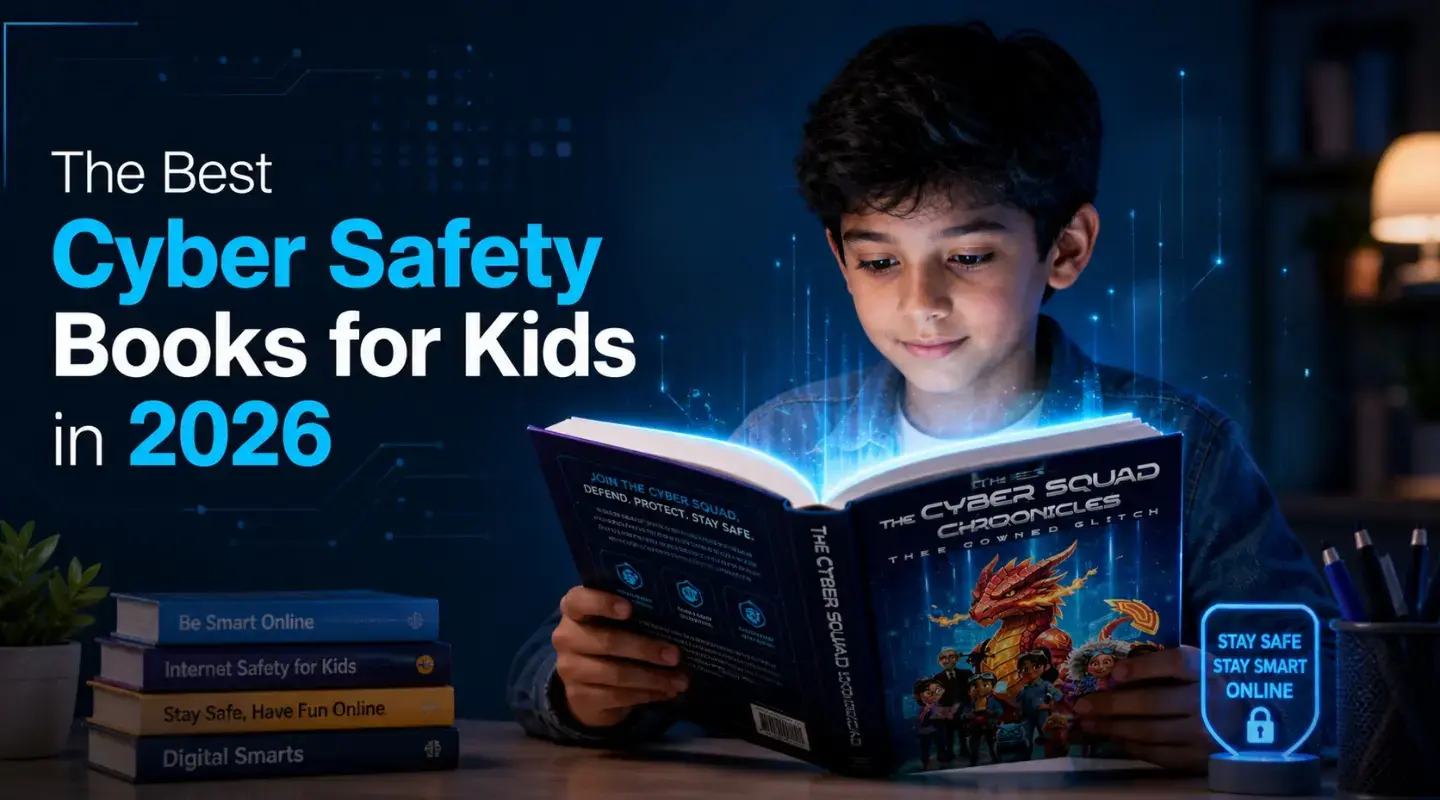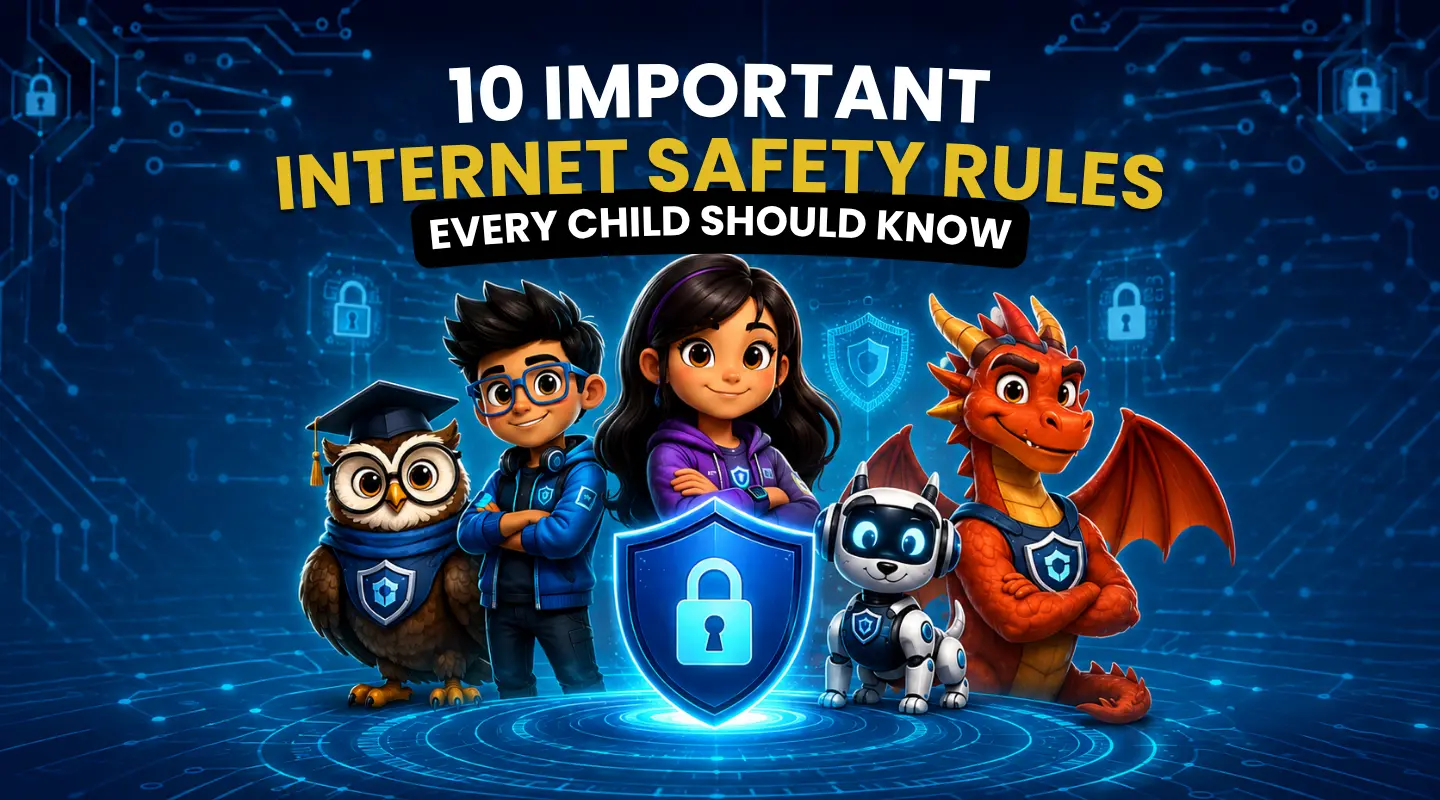
When we talk to children about the internet in 2026, we are no longer talking about a destination they visit for an hour a day. We are talking about the environment where they go to school, maintain their friendships, and explore their identities. Because the digital world is now inseparable from the physical one, the way we teach safety must also evolve. We cannot rely on restrictive barriers that children will inevitably learn to bypass. Instead, we must provide them with internal compasses.
Think of internet safety rules for kids as digital superpowers. When a child understands how to navigate a suspicious link or protect their privacy, they are not just following a command, they are exercising agency. As a cybersecurity executive who has spent twenty years protecting global financial systems, I have seen how the most complex breaches often start with the simplest human errors. By teaching these ten fundamental rules early, we give our children the reflexes they need to stay safe in a world that never truly goes offline.
Why Every Child Needs Clear Internet Rules
Children crave structure because it provides a sense of predictability in an unpredictable world. When internet safety rules for children are presented as a series of chores or fears, they are quickly discarded. However, when those same rules are presented as a set of skills that make a child “tech-smart,” they become part of a child’s identity.
The goal of these rules is habit formation. We want a child to pause before clicking a pop-up the same way they pause before crossing a busy street. This level of instinct only comes through consistent repetition and, more importantly, through seeing these rules modeled in the stories they consume. This is why I chose to weave every one of these principles into the adventures of the Cyber Squad, because a child who sees Isha or Pixel the Owl navigate a digital trap will remember the solution far longer than a child who simply read a checklist on a refrigerator.
10 Internet Safety Rules Every Child Should Know
Rule 1: Never Share Your Personal Information
The first and most important rule for any young navigator is to keep private details private. This includes more than just a home address, it encompasses school names, current locations, phone numbers, and even the names of sports teams. In The Crowned Glitch, Isha learns that seemingly harmless details can be pieced together by someone with bad intentions to create a map of her real life. We teach children that their personal information is like a treasure chest, and they should never give the key to anyone they meet online, regardless of how friendly that person seems to be.
Rule 2: Tell a Trusted Adult If Something Feels Wrong
Digital safety is not a solo mission. We encourage children to listen to their instincts, which we often call their “internal firewall.” If an image, a message, or a game makes them feel uncomfortable, scared, or even just confused, their first step should always be to step away and find a parent or teacher. In my series, the mentors Pixel the Owl and Blaze the Firewall Dragon remind the squad that asking for help is a sign of intelligence, not a lack of skill. By maintaining an open door for these conversations, we ensure that children never feel they have to solve a digital crisis on their own.
Rule 3: Never Talk to Strangers Online
The concept of a “stranger” can be difficult for children to grasp in a gaming or social environment where everyone feels like a friend. We must clarify that an online friend is still a stranger if you have not met them in the physical world and verified who they are with a parent. The Crowned Glitch features a pivotal chapter on fake friend requests where a character appears to be a fellow student but is actually a malicious program. This helps children understand that on the internet, people can easily pretend to be someone they are not, making it essential to keep the circle of communication limited to known, real-life contacts.
Rule 4: Keep Your Passwords Private Even From Your Best Friends
Children often view sharing passwords as a sign of trust or “best friend” status, but we must teach them that passwords are like toothbrushes because they should never be shared. A password is the only thing standing between a child’s private life and the rest of the world. Within the Cyber Squad missions, the characters treat their security credentials with the utmost respect, demonstrating that even the best friendships can change, and a shared password can lead to unintended consequences like account takeovers or impersonation.
Rule 5: Think Before You Post or Send
One of the hardest lessons for a child to learn is that the “delete” button is often an illusion. Once a photo or message is sent, it can be screenshotted, saved, and shared by anyone who sees it. In Maze of Shadows, the squad deals with a viral rumor that spreads through their school like wildfire, showing how a single impulsive post can have long-lasting effects on someone’s reputation. We teach children to take five deep breaths before hitting “send” on anything, asking themselves if they would be comfortable with their principal or their grandmother seeing that post.
Rule 6: Only Visit Approved Websites and Apps
The internet is full of “dark alleys” that can appear suddenly in the form of redirected links or deceptive advertisements. We set a firm rule that children must check with an adult before downloading a new app or visiting a website they have never used before. This is not about surveillance, it is about curation. In the Cyber Squad universe, the characters learn that unknown websites can often be “traps” designed to install viruses or steal data, which helps children visualize why sticking to a “safe zone” of approved platforms is so vital for their device’s health.
Rule 7: Treat Others Online as You Would in Person
The anonymity of a screen can sometimes embolden children to say things they would never dream of saying to someone’s face. Digital kindness is a core theme in Maze of Shadows, where the characters encounter “trolls” who thrive on conflict and negativity. We teach children that there is a real person with real feelings on the other side of every username. If they wouldn’t say it in the school cafeteria, they shouldn’t type it in a chat box, because the impact of cyberbullying is just as painful as any physical confrontation.
Rule 8: Always Log Out on Shared Devices
Whether they are using a computer in the school library or a tablet at a friend’s house, children must learn the habit of logging out. Leaving an account open is like leaving the front door of your house wide-eyed while you go for a walk. The Cyber Squad emphasizes this during their school-based missions, showing how easily someone else can accidentally or intentionally access private messages or change settings if an account is left active. It is a simple, five-second habit that prevents a massive amount of potential trouble.
Rule 9: Do Not Click on Unknown Links or Pop-Ups
Phishing is the most common way that both adults and children get into trouble online. These links often look like exciting prizes, free game currency, or urgent warnings about a “glitch” in an account. Taking a direct cue from the plot of The Crowned Glitch, we show children that these links are the digital version of a “Trojan Horse.” By teaching them to never click on something that looks “too good to be true” or comes from an unrecognized sender, we help them avoid the vast majority of malware and scams that target young users.
Rule 10: Balance Your Screen Time
True digital safety includes protecting a child’s mental and physical health. The internet is designed to be addictive, with notifications and infinite scrolls that can keep a child’s brain in a state of constant stimulation. Throughout the Cyber Squad Chronicles, the characters emphasize that their “tech-powers” are most effective when they are well-rested and connected to the real world. We encourage a balance where online time is a tool for learning and fun, but offline time is where they recharge their creativity and spend time with family.
How to Turn These Rules Into Habits at Home

The key to making these rules stick is to move them from the page into the daily rhythm of your home. You do not need to sit your child down for a formal lecture. Instead, use “micro-conversations” that happen naturally. If you see a pop-up while you are browsing together, ask your child what they think would happen if you clicked it. If a character in a movie shares a secret, ask if that would be safe to share online.
Reading together is perhaps the most powerful way to solidify these habits. When you read The Cyber Squad Chronicles with your child, you are giving them a safe space to explore “what if” scenarios. After a chapter, you might ask, “What would you have done if you were Isha in that situation?” This type of active engagement transforms a rule from a restriction into a strategy for success.
How to Turn These Rules Into Habits at Home
To help your family get started, I have created this simple list that you can print out or keep on your phone. Review it with your child and see if they can explain why each rule is important.
The Cyber Squad’s 10 Rules for Digital Success:
- I keep my “treasure chest” locked. I never share my name, school, or address.
- I use my “help” button. If something feels weird, I tell a parent right away.
- I only chat with real-world friends. I don’t accept requests from people I don’t know.
- My passwords are for me and my parents. I never share them with friends.
- I think before I “ink.” Once I send it, I can’t take it back.
- I stay on the “safe path.” I only use apps and sites my parents have checked.
- I am a digital hero. I am always kind to others in chats and games.
- I close the door behind me. I always log out of computers at school or libraries.
- I don’t bite the hook. I never click on weird links or “you won” pop-ups.
- I power down to power up. I make sure to spend plenty of time playing offline.
Want Your Child to Learn These Rules Through Story?
If you are looking for a way to make these ten rules feel exciting rather than exhausting, I invite you to join Isha and the squad. The Cyber Squad Chronicles was written specifically to turn these complex safety topics into a high-stakes adventure that kids actually want to read.
You can find both The Crowned Glitch and Maze of Shadows on Amazon. They are available in paperback for your home library or on Kindle for instant reading. If you are a Kindle Unlimited subscriber, you can even read the entire series for free.
Get The Cyber Squad Chronicles on Amazon